Barndominium Builders in Johnstown, Pennsylvania
Johnstown barndominium buyers inherit two local questions before any floor plan: how close the land sits to the rivers, and what lies underneath it. The city grew in a narrow valley where the Stonycreek and Little Conemaugh rivers meet, and Cambria County was coal country for more than a century. Pennsylvania Barndominium Builders designs and builds barndominiums, pole barn homes and steel-frame houses for owners in Johnstown and across the surrounding hills. We can supply a barndominium kit and plans for an owner who wants to handle the build, draw custom plans for one parcel, or deliver the whole project turnkey. Building permits inside the city are handled by the Laurel Municipal Inspection Agency, the inter-municipal code agency the City belongs to, and many neighboring boroughs and townships use the same agency. Our pole barn homes and metal homes pages cover the two main frame types. Tell us about the lot through the survey and we will look at its flood zone, slope and mining history before anything is drawn.
Johnstown at a glance
- County
- Cambria County
- Municipality
- City
- Building permit
- Council of governments code agency
- Local facts on this page
- 6, each linked to its source
Before you build in Johnstown
The local answers that shape a build here, each taken from the office or document that publishes it. Rules change, so we confirm them again against your parcel before drawing.
Laurel Municipal Inspection Agency (LMIA), the City of Johnstown's inter-municipal code agency
The City requires building permits for all new construction and administers the Uniform Construction Code through its membership in LMIA, which provides residential and commercial building permits for the City. Permits go to the owner, an authorized agent or the contractor, and unpermitted work draws a stop-work order. Surrounding municipalities each set their own arrangement.
Source: Code Enforcement Permits, City of Johnstown (johnstownpa.gov)
- Permits run through LMIA
- The City of Johnstown is a member of the Laurel Municipal Inspection Agency, which provides its residential and commercial building permits. Building permits are required for all new construction in the City, and UCC-related work is inspected before an occupancy permit is issued (City permits page, read 26 Sep 2026).
- An agency owned by its member towns
- LMIA, formally the Cambria County Building Codes Enforcement Agency, was established by inter-municipal agreements to administer the Uniform Construction Code for member municipalities. It performs building code, floodplain, driveway, zoning and property maintenance inspections, and its participating list includes the City of Johnstown.
- The 1889 flood
- The National Park Service records that the South Fork Dam failed on May 31, 1889, releasing 20 million tons of water that devastated Johnstown and killed 2,209 people. The dam site is now the Johnstown Flood National Memorial.
- Channel walls, and the 1977 flood
- After the St. Patrick's Day flood of 1936, the Army Corps of Engineers began channel improvements in 1938 along the Conemaugh, Stony Creek and Little Conemaugh. In July 1977 a storm pushed about 115,000 cubic feet per second down the Conemaugh against a design capacity of 81,500, covering 64% of the city's land area.
- Coal mined beneath the city
- Heritage Johnstown records that the Cambria Iron Company's Rolling Mill Mine ran under Yoder (Westmont) Hill near the confluence of the Little Conemaugh and Stonycreek rivers, yielding nearly 22.4 million tons of coal before it closed in 1931. By 1901 Cambria County had 130 significant coal mines.
- Mine subsidence insurance is separate
- DEP's Mine Subsidence Insurance brochure states that standard homeowners policies exclude damage caused by mine subsidence and that coal deposits and abandoned mines lie under 43 of Pennsylvania's 67 counties. The Commonwealth has run the program since the early 1960s.
Source: Code Enforcement Permits, City of Johnstown (johnstownpa.gov)
Source: Welcome to Laurel Municipal Inspection Agency (lmiagency.org)
Source: Johnstown Flood National Memorial (U.S. National Park Service) (nps.gov)
Source: Adventures in Flood Control: The Johnstown, Pennsylvania Story (nwrfc.noaa.gov)
Source: History of Coal in Cambria County, Heritage Johnstown (heritagejohnstown.org)
Source: Mine Subsidence Insurance (DEP brochure) (files.dep.state.pa.us)
Building on land around Johnstown
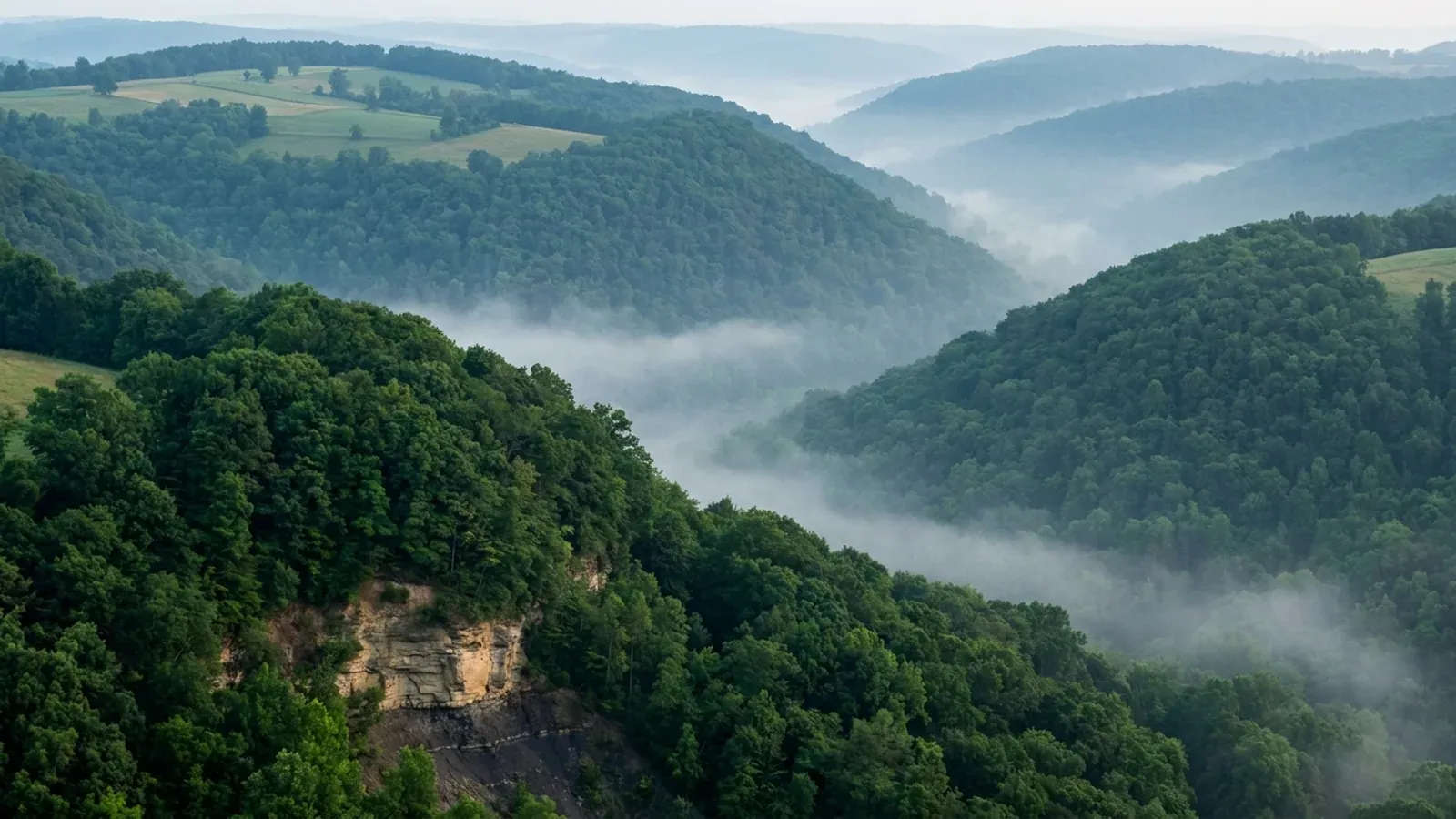
Around Johnstown the flat ground is mostly in the valley, and the valley is where the floods went. Before buying, pull the flood map for the parcel and ask how the lot fared in 1977, when water overtopped the channel improvements. Hillside land above the city avoids the rivers but trades them for slope, and for the chance of old coal workings underneath: the Rolling Mill Mine alone ran under Westmont's hill. Ask the seller and the agency about past subsidence, check DEP's mining-conditions resources, and price mine subsidence insurance alongside the house, since homeowners policies leave it out. Rural parcels without public sewer also need an on-lot sewage permit from the local sewage enforcement officer, issued after soil testing and before the building permit.
Where we build in this part of Pennsylvania
Pittsburgh & Southwestern Pennsylvania
Barndominium Kits and Plans in Johnstown
A kit you finish with your own crew, a custom plan, or a turnkey build. The parcel decides the budget more than the floor area does, so we price against your land rather than a rate card.
Barndominium Kits
Barndominium kits for sale in Pennsylvania: steel and pole barn packages sized to your municipality's snow and wind values, delivered and put up.
Custom Plans
Custom barndominium plans for Pennsylvania land: floor plans and house plans fitted to your slope, your sewage area and your municipality's code.
Turnkey Builds
Turnkey barndominiums in Pennsylvania: land checks, plans, permits, site work, shell and finishes under one contract, from raw land to move-in.
Pole Barn Homes near Johnstown
A pole barn home puts the living space inside a wood-framed building set on posts, the same bones as a farm building, finished as a house. Whether it suits a parcel near Johnstown depends on the local answers above: who reviews the plans, what the zoning allows, and how the lot handles sewage.
Pole Barn HomesHave land in or around Johnstown? Tell us about the parcel and what you want to build, and we will check it against the local rules before anything is drawn.
Building in Johnstown: questions
Start the surveyHow much does it cost to build a barndominium near Johnstown?
Do I need a building permit for a barndominium in Johnstown?
Is flooding still a concern for Johnstown building lots?
Should I worry about old coal mines under my land?
Keep reading
What usually comes next once you know what Johnstown allows.
Cost to Build a Barndominium in Pennsylvania
Sourced per-square-foot ranges by tier and size, and what moves the number on your land.
Read itCan You Build a Barndominium in Pennsylvania?
Zoning, sewage and who inspects, before you buy the land.
Read itHow Long Does It Take?
From parcel to move-in, and which steps set the clock.
Read itSources for this page
The published pages behind the Johnstown facts above. Rules change, so check the current version with the office before you rely on it.
- Code Enforcement Permits, City of JohnstownBuilding permit authority; Permits run through LMIAjohnstownpa.gov
- Welcome to Laurel Municipal Inspection AgencyAn agency owned by its member townslmiagency.org
- Johnstown Flood National Memorial (U.S. National Park Service)The 1889 floodnps.gov
- Adventures in Flood Control: The Johnstown, Pennsylvania StoryChannel walls, and the 1977 floodnwrfc.noaa.gov
- History of Coal in Cambria County, Heritage JohnstownCoal mined beneath the cityheritagejohnstown.org
- Mine Subsidence Insurance (DEP brochure)Mine subsidence insurance is separatefiles.dep.state.pa.us
Other places we build around Johnstown
Across a municipal or county line the permit office, zoning and sewage agency can change, so each place has its own page.
Building in Johnstown?
Start with the survey. Tell us where the land is and what you want on it, and we will come back with which office permits it, what it will allow, and a plan to fit.