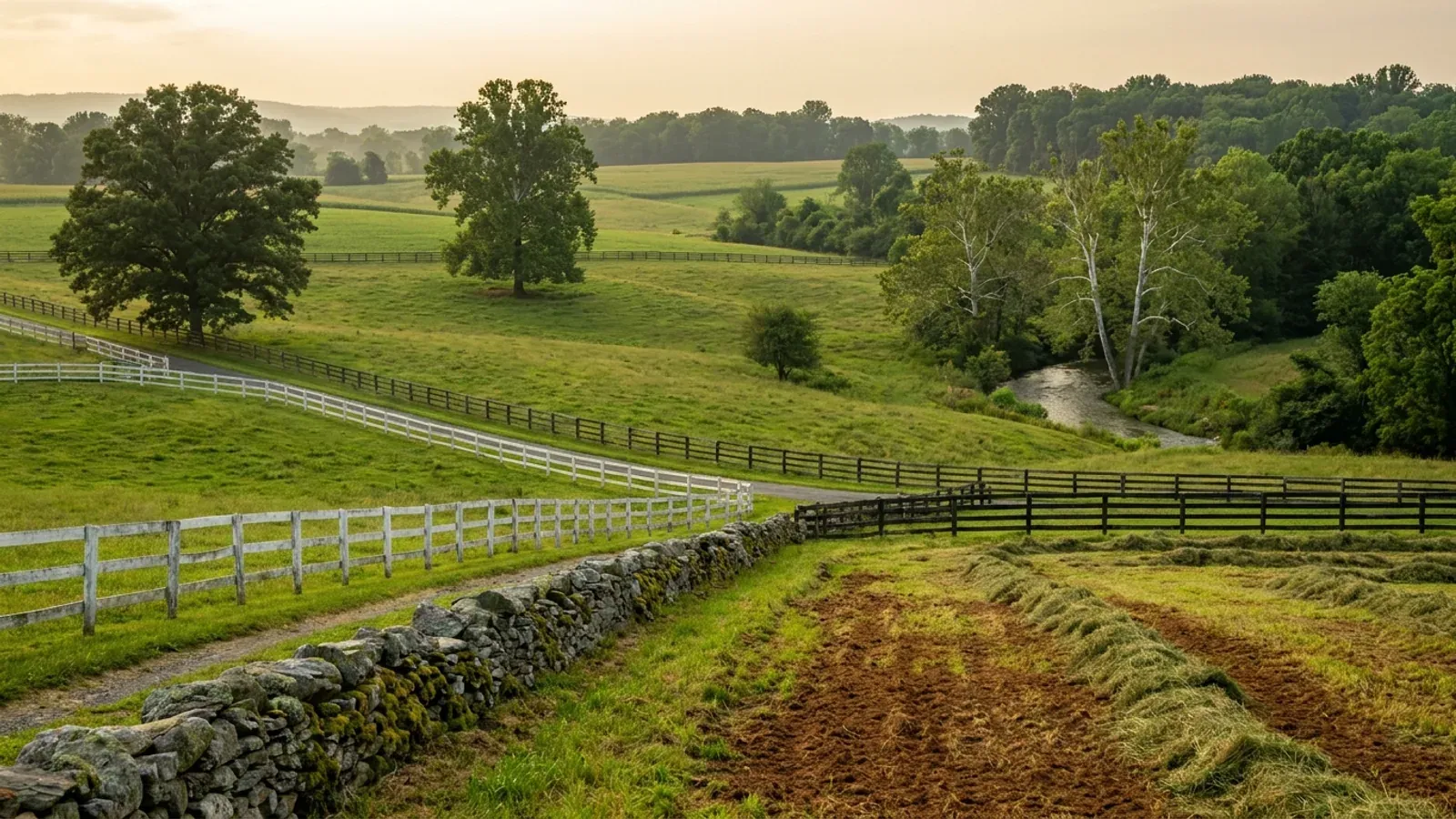
Barndominium Builders in Montgomery County, Pennsylvania
Montgomery County barndominium plans usually begin with one question: where is there still room to build? The inner townships along the Philadelphia line, Lower Merion and Abington among them, are almost fully developed, so a new barndominium there tends to mean a teardown lot or a rare leftover parcel. Open ground is more common further from the city, where larger lots, farm fields and wooded parcels still come up for sale and some sites have no public sewer. Our team plans steel-frame and pole barn homes with living quarters, shop bays and garages under one roof, and we take on projects anywhere in the county. Owners who want to do the finish work themselves can start from one of our barndominium kits; others ask us to draw custom plans for their parcel or to manage a turnkey build with the trades lined up for them. Houses are not permitted at the county level here: each township or borough runs its own building permits and zoning, while the county's Office of Public Health handles on-lot septic permits and the Planning Commission comments on new subdivisions. Send us the parcel through the survey, and we will check its municipality, zoning and sewer situation before any drawing starts.
Montgomery County at a glance
- County
- Montgomery County
- Building permit
- Each municipality, not the county
- Local facts on this page
- 5, each linked to its source
Before you build in Montgomery County
The local answers that shape a build here, each taken from the office or document that publishes it. Rules change, so we confirm them again against your parcel before drawing.
Each township or borough in Montgomery County issues its own building permit through its code office or the agency it has retained
The township or borough where the lot sits reviews plans, issues the permit and inspects under the Uniform Construction Code, and it also decides subdivisions. The Montgomery County Planning Commission reviews subdivision and land development proposals first, but only in an advisory role. On-lot septic permits come from the county's Office of Public Health, not from the municipality.
Source: Subdivision & Land Development Reviews, Montgomery County Planning Commission (montgomerycountypa.gov)
- On-lot septic is a county program
- Under Act 537, the Montgomery County Office of Public Health issues the permit for anyone building or modifying an on-lot sewage system. Soil probes and percolation tests come first; if the site is suitable, a system design goes to the Office for approval, and its Sewage Enforcement Officers inspect the installed system before final approval (county page, updated 5 Dec 2025).
- County review of new lots is advisory
- Every subdivision and land development proposal goes to the Montgomery County Planning Commission for review before the municipality acts. The county review is advisory only; the municipality makes the final approval. Applicants file through the municipality, which submits to the county online.
- Lower Merion code transition
- Lower Merion Township's Building Division explains the move to the 2021 codes, effective January 1, 2026: a project contracted before that date could apply under the earlier codes until July 1, 2026, while anything contracted after January 1, 2026 follows the 2021 codes (page read 26 Sep 2026).
- Abington enforces the code itself
- Abington Township describes itself as a Uniform Construction Code opt-in municipality with local amendments. For one- and two-family homes contracted and applied for on or after January 1, 2026, it lists the 2021 International Residential Code as adopted and amended by Pennsylvania.
- Conservation district
- The Montgomery County Conservation District, formed in 1956 after a petition from 587 farmers, runs programs such as Erosion and Sediment Control through agreements with the state. Its site covers Chapter 102 and NPDES permitting for earth disturbance.
Source: On-Lot Sewage Permitting, Montgomery County Office of Public Health (montgomerycountypa.gov)
Source: Subdivision & Land Development Reviews, Montgomery County Planning Commission (montgomerycountypa.gov)
Source: Building Division, Lower Merion Township (lowermerion.org)
Source: Codes & Regulations, Abington Township (abingtonpa.gov)
Source: About Us, Montgomery County Conservation District (montgomeryconservation.org)
Building on land around Montgomery County
Buildable land in Montgomery County is uneven. The townships nearest Philadelphia are built out and sewered, so a lot there is usually a replacement site where the township's zoning district and setbacks decide the footprint. Further out, larger parcels still appear, and some of them have no sewer line, which means the county's Sewage Enforcement Officer tests the soil before a septic design can be approved. Earth disturbance of 5,000 square feet or more needs a written erosion and sediment control plan, and one acre or more needs an NPDES permit worked through the conservation district. A pole barn home often suits a larger rural parcel because its posts need less excavation than a full foundation.
Where we build in this part of Pennsylvania
Philadelphia, Bucks, Chester & Southeast Pennsylvania
- Philadelphia
- Bensalem
- Pottstown
- West Chester
- Bucks County
- Chester County
- Montgomery County
- Delaware County
Barndominium Kits and Plans in Montgomery County
A kit you finish with your own crew, a custom plan, or a turnkey build. The parcel decides the budget more than the floor area does, so we price against your land rather than a rate card.
Barndominium Kits
Barndominium kits for sale in Pennsylvania: steel and pole barn packages sized to your municipality's snow and wind values, delivered and put up.
Custom Plans
Custom barndominium plans for Pennsylvania land: floor plans and house plans fitted to your slope, your sewage area and your municipality's code.
Turnkey Builds
Turnkey barndominiums in Pennsylvania: land checks, plans, permits, site work, shell and finishes under one contract, from raw land to move-in.
Pole Barn Homes near Montgomery County
A pole barn home puts the living space inside a wood-framed building set on posts, the same bones as a farm building, finished as a house. Whether it suits a parcel near Montgomery County depends on the local answers above: who reviews the plans, what the zoning allows, and how the lot handles sewage.
Pole Barn HomesHave land in or around Montgomery County? Tell us about the parcel and what you want to build, and we will check it against the local rules before anything is drawn.
Building in Montgomery County: questions
Start the surveyHow much does it cost to build a barndominium near Montgomery County?
Do I need a building permit for a barndominium in Montgomery County, Pennsylvania?
Can I still build a barndominium in Lower Merion or Abington?
Who approves a septic system for a Montgomery County lot?
Keep reading
What usually comes next once you know what Montgomery County allows.
Cost to Build a Barndominium in Pennsylvania
Sourced per-square-foot ranges by tier and size, and what moves the number on your land.
Read itCan You Build a Barndominium in Pennsylvania?
Zoning, sewage and who inspects, before you buy the land.
Read itHow Long Does It Take?
From parcel to move-in, and which steps set the clock.
Read itSources for this page
The published pages behind the Montgomery County facts above. Rules change, so check the current version with the office before you rely on it.
- Subdivision & Land Development Reviews, Montgomery County Planning CommissionBuilding permit authority; County review of new lots is advisorymontgomerycountypa.gov
- On-Lot Sewage Permitting, Montgomery County Office of Public HealthOn-lot septic is a county programmontgomerycountypa.gov
- Building Division, Lower Merion TownshipLower Merion code transitionlowermerion.org
- Codes & Regulations, Abington TownshipAbington enforces the code itselfabingtonpa.gov
- About Us, Montgomery County Conservation DistrictConservation districtmontgomeryconservation.org
Other places we build around Montgomery County
Across a municipal or county line the permit office, zoning and sewage agency can change, so each place has its own page.
Building in Montgomery County?
Start with the survey. Tell us where the land is and what you want on it, and we will come back with which office permits it, what it will allow, and a plan to fit.